Mitsuke
Mitsuke Bass Clarinet Endpin
Mitsuke Bass Clarinet Endpin
Couldn't load pickup availability
Mitsuke Bass Clarinet Endpin
Every point of contact on a bass clarinet shapes the sound that comes out of it, and the end pin is no exception. The stock pin that ships with most instruments is an afterthought — stamped hardware chosen for cost, not tone. The Mitsuke end pin is engineered as a direct replacement, designed specifically to change how your instrument resonates and, in turn, how it sounds.
Until now, these pins have only been available in Japan. NYC Woodwinds is the first and only shop in the United States offering the Mitsuke end pin lineup — so if you've read about these online or heard about them from a player who picked one up overseas, this is the only place in the country to get one!
Because the pin sits in direct contact with the body of the instrument, its mass and material have a real effect on how vibrations move through the lower joint and bell. Players who switch from a stock pin to a Mitsuke pin consistently describe the change in the same terms: the tone opens up, the color gets warmer and darker, and the sound feels richer and more complete, particularly in the low register where the bass clarinet's character lives. It's a small, inexpensive swap that changes something fundamental about how the instrument feels to play and how it sounds to an audience.
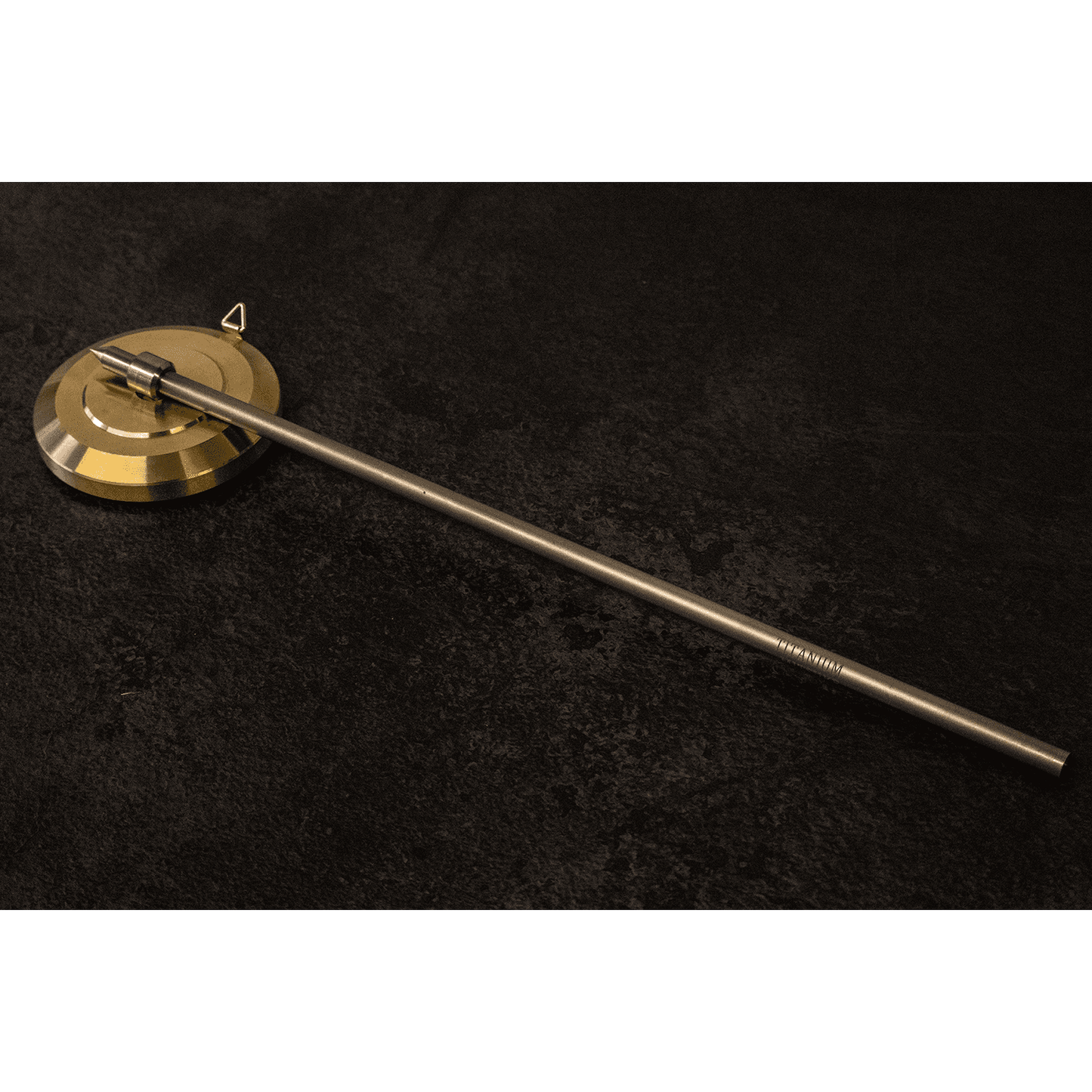
Each pin comes with two included accessories, giving you three distinct ways to set it up depending on the room, the floor, and the sound you're after:
- Rubber cover on — the quietest, most floor-friendly option, ideal for practice rooms, carpeted stages, or any surface you'd rather not mark up.
- Pointed end exposed, no cover — direct metal-to-floor contact for players chasing maximum resonance, letting the instrument's vibration transfer as openly as possible into the room.
- Brass round stopper attached (the piece cellists call a "rock stop") — adds brilliance to the tone while also protecting hardwood and other floors from being punctured by the bare point.
Having all three options in one purchase means you can match your setup to the venue: a quieter cover for a shared rehearsal space, the exposed point when you want the most resonance the instrument can give, or the rock stop when you want that added brilliance without worrying about the floor underneath you.
Each finish also offers its own tonal character, so you can choose the color that best complements your instrument and your ear:
- Quartet — a balanced finish for players seeking richness without an overly dark result.
- Incredibly responsive and powerful. Combination of tungsten, titanium, brass and carbon.
- Triple Brilliante — a dense, polished finish that leans into a warmer, rounder low end. Increased response and power. Combination of tungsten, titanium and brass.
- Brass & Titanium (Titanium Tip) — combines brass's natural warmth with a titanium tip, for a blend of depth and clarity.
- Titanium — the lightest material in the line, for players who want the tonal benefit without added weight.
Who It's For
Bass clarinetists who want a warmer, richer, more complete tone and increased response — especially in the low register — and the flexibility to adjust their setup for different rooms and floors.
From Michael Norsworthy...
"As a performing clarinetist, I'm always listening for tone color, and the end pin is one of the most overlooked variables in how a bass clarinet actually sounds. I recommend the Mitsuke pin because the improvement is immediate and real, and I'm proud that NYC Woodwinds is bringing it to American players for the first time — having three setup options in one purchase means you can dial in the exact sound and floor protection each venue calls for."
**Pegs measure 7mm in diameter and will not fit Royal Global Instruments**
Share